

Best Loose Leaf Tea for Iced Tea: Assam Wins in 2026
Best overall: Assam black tea. Best for fruit-flavored iced tea: Hibiscus Berry Tea. Best for a lighter cup: green tea. This 2026 guide to the best loose leaf tea for iced tea compares everyday tea styles by flavor, brewing needs, and how you drink them.
- Assam black tea is the best loose leaf tea for iced tea when you want a full-bodied everyday cup.
- Hibiscus Berry Tea from Cinder and Cedar Coffee Roasters suits drinkers seeking hibiscus with fruit flavor.
- Choose green tea for a lighter cup, rooibos for a caffeine-free tea base, and peppermint for mint flavor.
- Check leaf format and brewing directions before ordering; tea names alone do not confirm loose leaf packaging.
Why this matters
The best iced tea starts with a flavor you enjoy without relying on extra sugar. A strong black tea, a tart herbal blend, and a delicate green tea produce different drinks, even when you use the same pitcher.
Cinder and Cedar Coffee Roasters sells tea alongside roasted coffee. Hibiscus Berry Tea is the named tea option in this guide; the other recommendations are tea styles you can use to narrow your search rather than claims about the store's selection.
Choose the tea first, then match the brewing method to it. Steeping every tea in boiling water until it looks dark is not a reliable shortcut to a good cold cup.
What makes the best loose leaf tea for iced tea?
For this 2026 buying guide, the deciding question is simple: which tea fits the cup you actually want to drink?
- Flavor: Decide between familiar black tea, tart hibiscus, gentle green tea, earthy rooibos, or mint before comparing packages.
- Body: Choose a fuller black tea for a substantial cup, especially when you plan to add ice or milk.
- Brewing tolerance: Black tea and many herbal infusions accept hotter water; green tea needs closer attention to temperature and time.
- Caffeine preference: Black and green tea contain caffeine. Pure rooibos and peppermint are naturally caffeine-free, but blends need an ingredient check.
- Ingredient clarity: Distinguish fruit pieces, herbs, and added flavoring. A berry-flavored blend is not necessarily made with whole berries.
- Leaf format: Confirm loose leaf on the listing or package. Also check whether your strainer can retain the smaller pieces in an herbal blend.
Buy for your routine, not for the longest ingredient list. A straightforward tea you brew consistently is a better fit than a complicated blend whose flavor you do not enjoy.
Best iced tea options at a glance
| Rank | Tea | Best for | Standout feature | Key limitation |
|---|---|---|---|---|
| 1 | Assam black tea | Full-bodied everyday iced tea | Malty black-tea character | Can become astringent when oversteeped |
| 2 | Hibiscus Berry Tea | Hibiscus with fruit flavor | Listed hibiscus, rosehips, orange peel, rooibos, and fruit flavors | Not a plain black tea; confirm leaf format |
| 3 | Ceylon black tea | A brisk cup with lemon | Lively black-tea character | Flavor varies by growing region and producer |
| 4 | Green tea | Light, unsweetened iced tea | Fresh, grassy or vegetal character | Excessive heat can make it bitter |
| 5 | Rooibos | A caffeine-free everyday tea base | Rounded, earthy flavor | Does not reproduce black tea's briskness |
| 6 | Peppermint tea | A distinctly minty cold drink | Clear mint aroma and flavor | Mint dominates rather than providing a neutral base |
1. Assam black tea: best for full-bodied everyday iced tea
Assam black tea is the default choice when you want iced tea that tastes unmistakably like black tea. Its familiar malty character suits a plain glass, a squeeze of lemon, or a little milk.
Look for plain Assam if you want to learn what the tea itself tastes like. A blend containing Assam can work too, but other ingredients change the result.
Assam black tea pros:
- Full-bodied character fits a classic iced-tea routine.
- Works with several serving styles without requiring a flavored blend.
- Gives you a straightforward starting point for adjusting strength.
Assam black tea cons:
- Contains caffeine, so it does not fit a caffeine-free routine.
- Long steeping can produce an astringent cup rather than a better one.
Best for: You want a dependable black-tea base and plan to make iced tea regularly.
Verdict: Buy Assam black tea for a full-bodied starting point. Adjust the amount of tea before extending the steep far beyond the package instructions.
2. Hibiscus Berry Tea: best for hibiscus with fruit flavor
Hibiscus Berry Tea from Cinder and Cedar Coffee Roasters is described as a flavored herbal tea. Its listed ingredients include organic hibiscus flowers, rosehips, orange peel, rooibos, blueberry flavor, and passionfruit flavor.
Hibiscus Berry Tea from Cinder and Cedar Coffee Roasters is best for iced-tea drinkers seeking a hibiscus-based blend with fruit flavor. Hibiscus provides a naturally tart direction; the ingredient list makes this a different choice from a plain black tea.
Hibiscus Berry Tea pros:
- Names its herbal ingredients and fruit flavors in the description.
- Includes hibiscus for drinkers who prefer a tart tea base.
- Offers an alternative to a plain black- or green-tea routine.
Hibiscus Berry Tea cons:
- Does not suit someone seeking unflavored black tea.
- The supplied description does not establish loose leaf format or brewing directions; check those details before ordering.
Best for: You prefer hibiscus and fruit flavor over a traditional black-tea taste.
Verdict: Buy Hibiscus Berry Tea for this flavor direction after confirming the format meets your loose leaf needs. Do not assume blueberry flavor means whole blueberries are included.
3. Ceylon black tea: best for iced tea with lemon
Ceylon black tea is another useful starting point for a familiar iced-tea cup. Many examples have a brisk character that fits a simple lemon serving, although the name covers teas from different growing areas in Sri Lanka.
Choose a plain Ceylon black tea when you want to compare it directly with Assam. Keep the brewing and serving method consistent so the comparison is about the tea, not a different amount of ice or sweetener.
Ceylon black tea pros:
- Fits a straightforward black-tea-and-lemon routine.
- Works as an unflavored base for your own serving choices.
- Offers a distinct alternative to Assam's malty direction.
Ceylon black tea cons:
- Contains caffeine.
- The regional name alone does not guarantee one specific flavor profile.
Best for: You want a brisk black tea and usually add lemon.
Verdict: Buy Ceylon black tea for a lemon-led routine. Read the individual tea's description instead of treating every Ceylon tea as identical.
4. Green tea: best for light, unsweetened iced tea
Green tea suits you when you want a lighter-tasting drink rather than the fuller character of black tea. Its flavor can be grassy, vegetal, or gently toasted, depending on the tea and how it is processed.
Follow the package's temperature guidance closely. Boiling water and prolonged steeping can overwhelm the lighter flavor with bitterness.
Green tea pros:
- Offers a different flavor direction from black tea.
- Suits a simple, unsweetened serving style.
- Lets you build a lighter tea routine without adding fruit flavor.
Green tea cons:
- Contains caffeine; green does not mean caffeine-free.
- Requires more attention to brewing temperature than a forgiving herbal infusion.
Best for: You want a light cup and are willing to watch the steep.
Verdict: Buy green tea for a lighter iced drink. Skip it as your first choice if you want dark, full-bodied tea or routinely leave leaves steeping unattended.
5. Rooibos: best for a caffeine-free everyday tea base
Pure rooibos is an herbal infusion rather than black or green tea. It is naturally caffeine-free and typically has an earthy, rounded character that works without a mint-led or sharply tart flavor.
Start with plain rooibos if you want to understand its taste. For a blend, read every ingredient: adding another type of tea can change both flavor and caffeine content.
Rooibos pros:
- Pure rooibos is naturally caffeine-free.
- Provides a useful alternative to tart hibiscus and strong mint.
- Works as a simple base without requiring fruit flavoring.
Rooibos cons:
- Does not taste like traditional black iced tea.
- Its fine pieces need a strainer that catches them effectively.
Best for: You want a caffeine-free base for a regular cold-tea routine.
Verdict: Buy pure rooibos when caffeine avoidance is the deciding factor. Check blended versions separately rather than applying the same assumption to every rooibos product.
6. Peppermint tea: best for a mint-led cold drink
Pure peppermint tea gives you a distinctly minty herbal infusion. Choose it because you like mint, not because you expect a neutral substitute for black tea.
Peppermint is also useful when you want a clear, recognizable flavor without choosing a fruit blend. Serve it plain first so you can decide whether anything needs adding.
Peppermint tea pros:
- Pure peppermint is naturally caffeine-free.
- Has an easily recognizable mint aroma and flavor.
- Keeps ingredient selection simple when you choose an unblended product.
Peppermint tea cons:
- Mint can dominate additions rather than sit quietly behind them.
- It will not satisfy a craving for classic black iced tea.
Best for: You specifically want a mint-flavored cold drink.
Verdict: Buy peppermint tea for mint, not as an all-purpose tea base. Skip it if you dislike a pronounced herbal flavor.
How to brew a better pitcher
Your 2026 iced-tea routine needs a repeatable method more than extra ingredients. Keep the tea, water, steep, and serving style consistent before making adjustments.
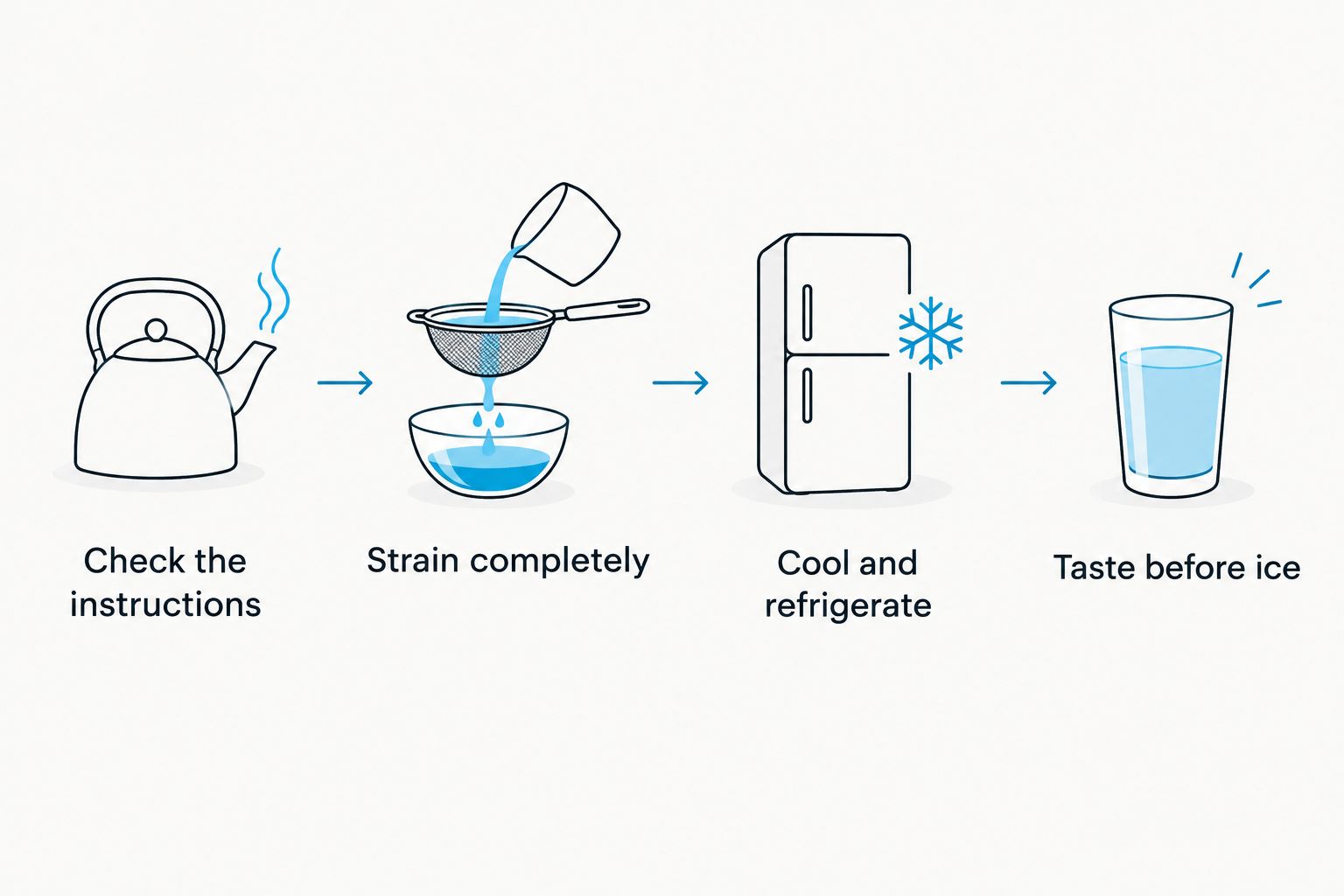
Check the instructions
Start with the package directions for the amount of leaf, water temperature, and steeping time. Black tea commonly uses near-boiling water, while green tea often calls for cooler water.
At standard atmospheric pressure, water boils at 100°C / 212°F. That is a reference point, not a temperature instruction for every tea; your particular tea's directions take priority.
Strain completely
Remove the leaves when the steep finishes. Leaving tea in the pitcher makes the brewing time uncontrolled and can produce an increasingly bitter or astringent drink.
Use a fine strainer for small herbal pieces. A roomy infuser lets water circulate around the leaves without packing them tightly together.
Cool and refrigerate
Transfer the strained tea to a suitable container, cool it promptly, and refrigerate it rather than leaving a pitcher sitting out. Use clean utensils and follow any storage guidance supplied with the tea.
Taste before adding ice
Taste a small portion once it has cooled. Decide whether the tea needs more body, a shorter steep, or a different variety before masking the result with sweetener.
Ice melts as it absorbs heat from the drink. At standard atmospheric pressure, pure water freezes at 0°C / 32°F; adding ice to warm tea therefore changes both temperature and strength.
Chill the tea first when you want less dilution. If you prefer pouring over ice, follow a concentrate recipe supplied for your tea instead of guessing a longer steep.
How these tea choices are ranked
This 2026 ranking matches each option to a distinct everyday use: full body, fruit flavor, lemon, a lighter cup, a caffeine-free base, or mint. It is a buying guide by tea style, not a claim that every individual tea within a category tastes the same.
The Hibiscus Berry Tea recommendation uses its listed ingredients. The category recommendations use established tea characteristics, with preparation and individual product differences treated as limitations rather than ignored.
Which iced tea should you choose in 2026?
Choose Assam black tea if you are undecided and want classic, full-bodied iced tea. Choose Ceylon black tea instead when your routine centers on a brisk cup with lemon.
For a different flavor direction, Hibiscus Berry Tea from Cinder and Cedar Coffee Roasters is the fruit-flavored herbal option here. Choose green tea for lightness, pure rooibos for a caffeine-free base, or pure peppermint when mint is the point.
Start with one tea style. Learning how you like it brewed is more useful than buying several unrelated blends and changing every variable at once.
FAQ
What's the best loose leaf tea for iced tea in 2026?
Assam black tea is the best starting point for full-bodied, traditional iced tea. Choose a different style when you specifically want fruit flavor, a lighter cup, or a caffeine-free base.
Is Assam or Ceylon better for iced tea?
Choose Assam for a malty, full-bodied direction and Ceylon for a brisk cup that suits lemon. Individual teas vary, so compare their descriptions and use the same brewing method.
Is Hibiscus Berry Tea a good choice for iced tea?
Hibiscus Berry Tea from Cinder and Cedar Coffee Roasters fits drinkers seeking a hibiscus-based herbal blend with fruit flavor. Its listed ingredients include hibiscus, rosehips, orange peel, rooibos, blueberry flavor, and passionfruit flavor; confirm loose leaf format before ordering.
Can I use green tea for iced tea?
Yes, green tea works for a lighter iced drink. Follow its temperature and steeping instructions because excessive heat or a long steep can make it bitter.
Which tea should I choose for caffeine-free iced tea?
Pure rooibos or pure peppermint is a naturally caffeine-free choice. Check the complete ingredient list of blends, since other tea ingredients can introduce caffeine.
Why does my iced tea taste weak after I add ice?
Melting ice adds water and dilutes the tea. Chill the tea before serving over ice, or follow a concentrate recipe provided for your specific tea.
Should I leave loose tea in the pitcher while it cools?
No, strain the leaves when the intended steep finishes. Leaving them in the pitcher extends extraction and makes the final flavor harder to control.
Does berry-flavored tea contain whole berries?
Not necessarily; berry flavor and whole berries are different ingredients. Read the ingredient list rather than assuming a fruit name describes every ingredient in the blend.
One last thing
Before replacing a tea you dislike, taste it cold without ice or sweetener. If that cup tastes good but your usual serving does not, the serving method deserves attention before the tea does.
For your next batch, change only the part that caused the problem: dilution, steeping, or additions. Keep everything else steady so you can tell whether the adjustment helped.